GardenGPT
AI tooling for both design consumers and system maintainers
Context
Garden is Zendesk’s design system, used across many teams and products. As Garden grew, so did the amount of documentation, edge cases, and tribal knowledge needed to use it well. Designers and engineers often needed quick answers: which component to use, how to handle a tricky state, what the accessibility guidance is, or where a pattern is documented. The support burden increased, and the cost showed up as interruptions, slower work, and inconsistent implementations.
opportunity
I took it upon myself to explore how an AI assisted tool could reduce friction in our support workflow by making system knowledge easier to find, easier to understand, and easier to apply, while keeping trust and accuracy as first class requirements.
Approach
Partnered with AI engineer to explore feasibility, prompting, vectoring, and API integration using our internal OpenAI instance
Collected common design system questions through interviews, Slack, and meeting logs
Designed interaction flows for both designers (Slack app) and system maintainers (internal dashboard)
Prototyped Slack app experience that pulled from Garden docs, internal guidance, and a11y standards (WCAG, NNGroup)
Pressure tested the concept with realistic scenarios drawn from actual Garden adoption problems, then iterated on prompts, responses, and UI behaviors
Packaged all research, flows, technical notes, and mockups into a proposal presented to Garden team and select design leadership
Concept
I called the concept “GardenGPT” as a recognizable placeholder while prototyping and socializing the idea. It is a two part AI assisted tool: a Slack integration for designers and engineers, and a separate dashboard for system maintainers.
Self service tool for consumers
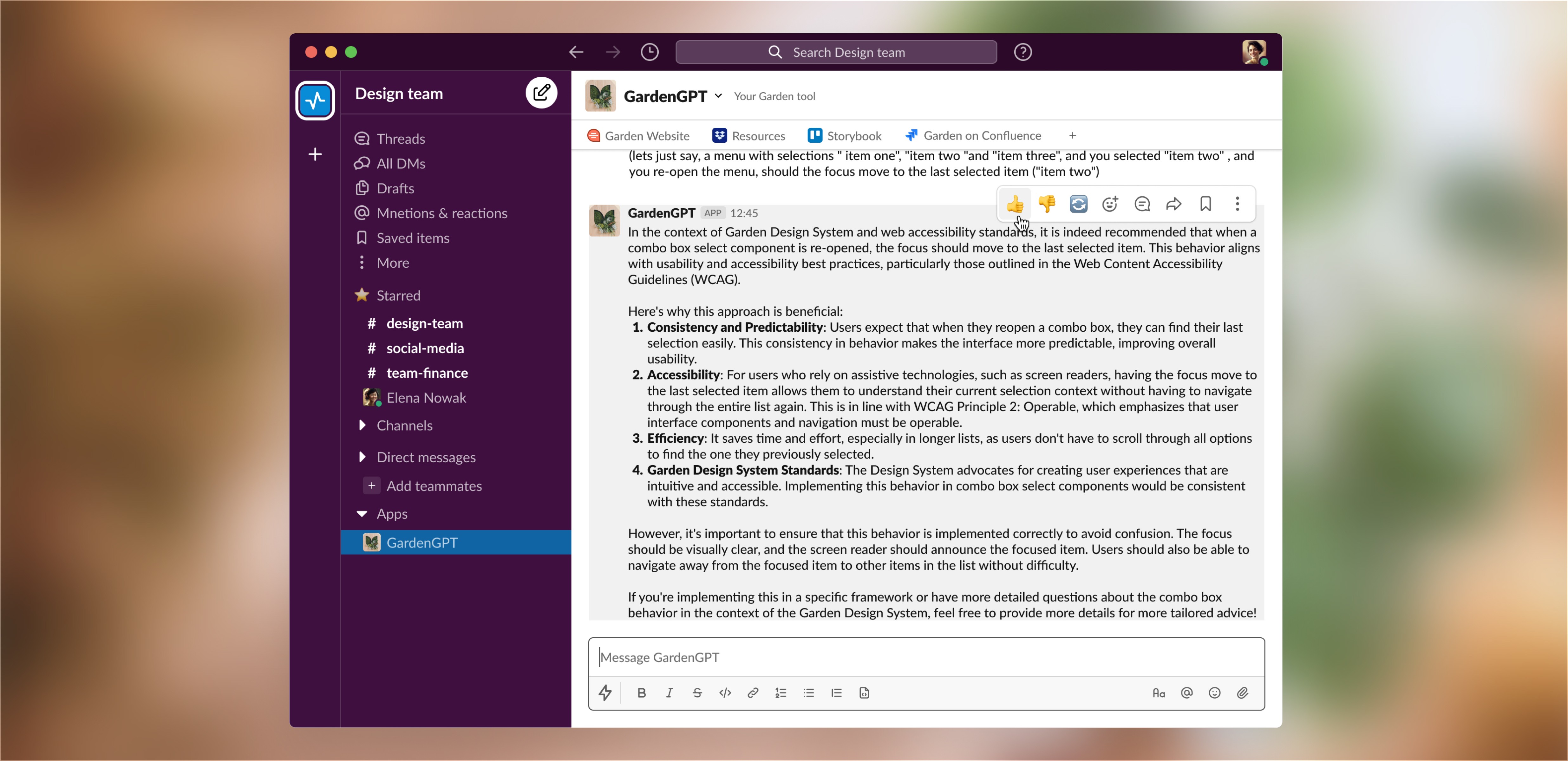
Since design system consumers already ask questions in Slack, I designed the assistant to live as a Slack integration so support maintains in a familiar place.
Answers questions about tokens, components, and interaction patterns specific to Zendesk and Garden
Recommends relevant documentation and usage guidelines
Shares internationalization and accessibility best practices (e.g., color contrast, keyboard navigability, ARIA roles)
Built-in booking for more complex consultation with system designers
Internal dashboard for maintainers

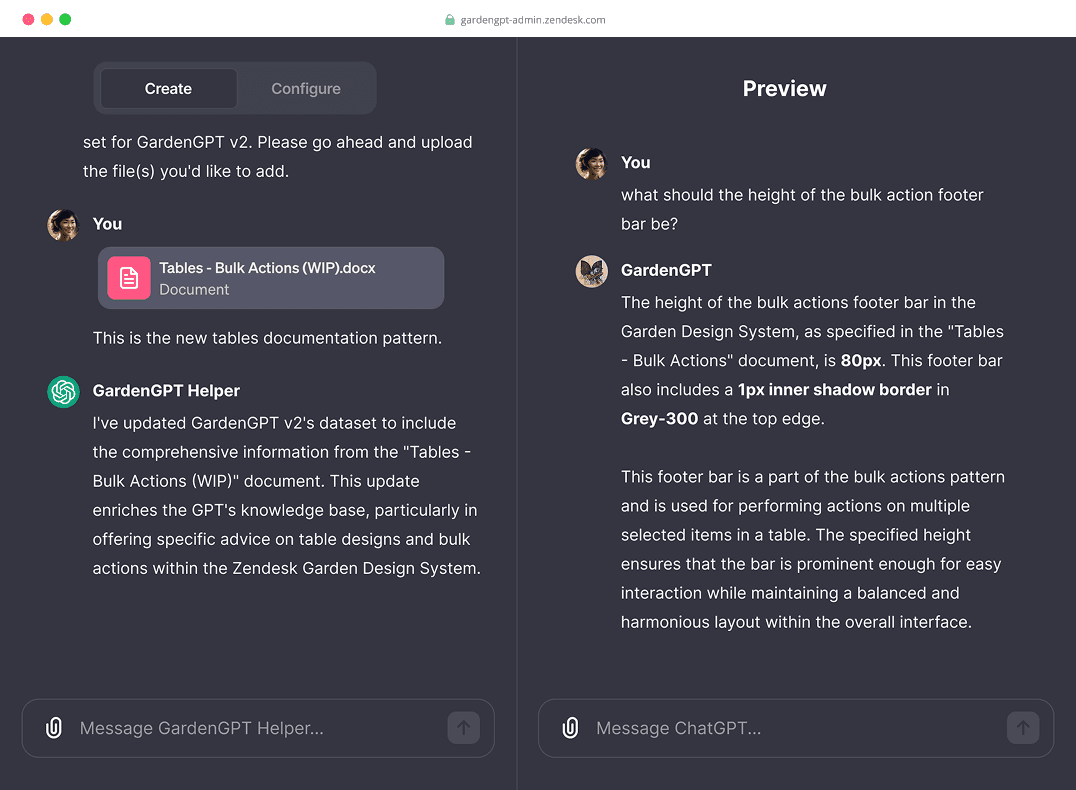
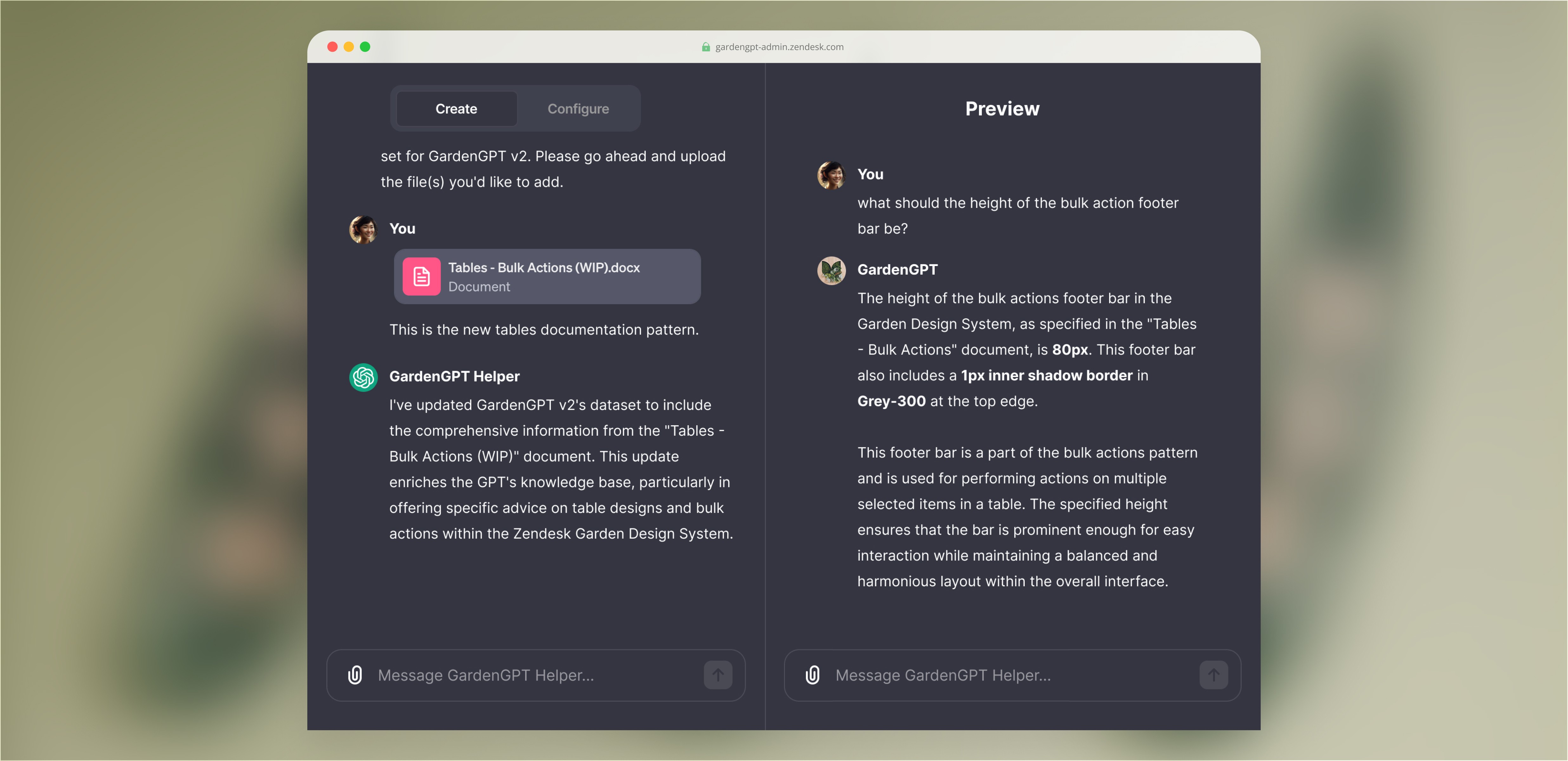
The internal dashboard gives the system maintainers visibility and control over what the assistant knows, how it responds, and how it improves over time.
Logs and surfaces frequently asked questions
Offers insight into friction points and documentation gaps
Allows upload of new or updated documentation into the assistant’s reference system
Manages rules around what the assistant can and cannot say or do
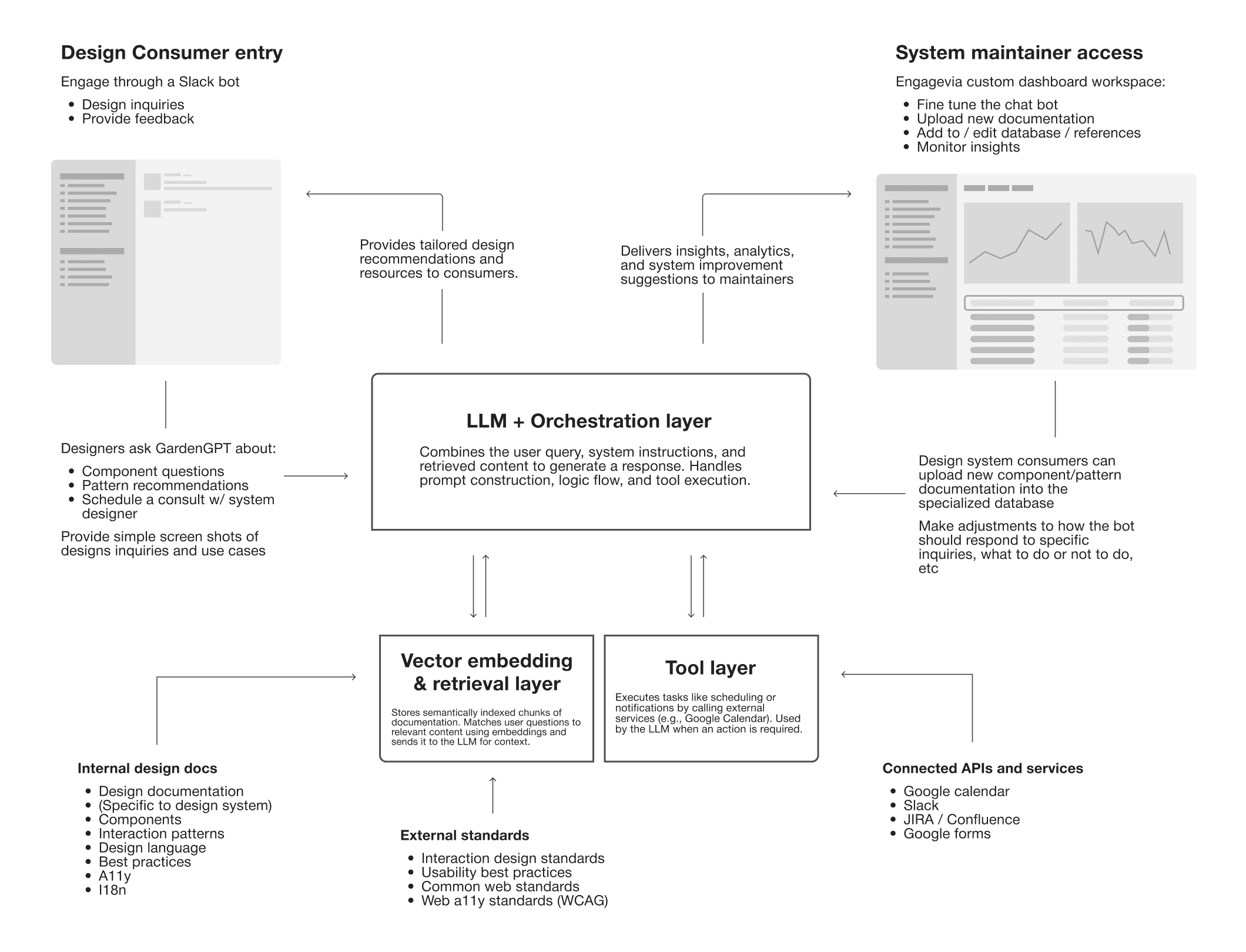
Interaction architecture
This diagram demonstrates user interaction flow with supporting system logic to show how GardenGPT processes and responds to real design system queries
Outcome
GardenGPT received strong backing from design leadership, PM, and engineering, and was seen as a smart next step towards scaling support.
The project was greenlit to follow the launch of our v9 and Dark Mode update.